A journey through places where art breathes
Sculptures have always been more than just carved stone or cast bronze. They are silent witnesses to time, culture, and human imagination. Some stand in places where history and nature meet, while others are housed in museums that preserve humanity’s most precious traces. Each carries a story — about the hands that created it, the civilization that shaped it, and the feeling it evokes in those who stand before it.
This is a journey through ten sculptures that have left their mark on the world — not only because of their beauty, but because of the atmosphere of the places where they are located.
David by Michelangelo, Florence
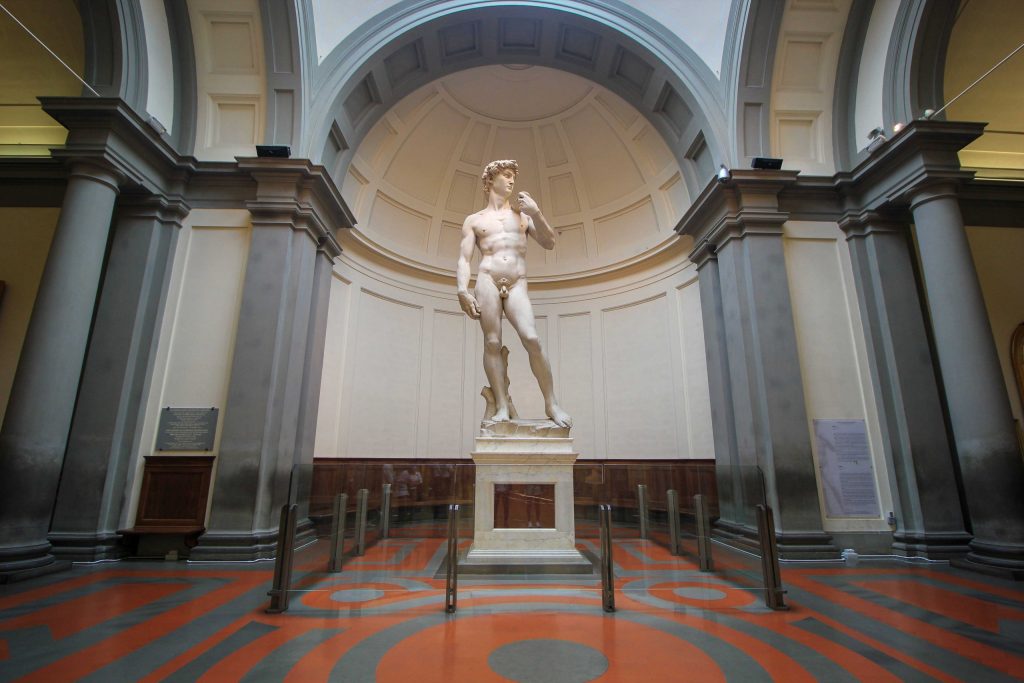
A Renaissance ideal of beauty and strength, Michelangelo’s David was carved from a single block of marble and still seems supernaturally alive today. David stands as a symbol of courage, perfect proportions, and the human spirit.
In the heart of Florence, in the Galleria dell’Accademia, stands David—a figure that looks as if he will step forward at any moment. The space around him is quiet, almost solemn, and the light falling from the dome emphasizes the perfect proportions and tension in his body. Florence is the city of the Renaissance, and David is its purest symbol: courage, youth, and human strength captured in a single block of marble.
Laocoön and His Sons, Vatican
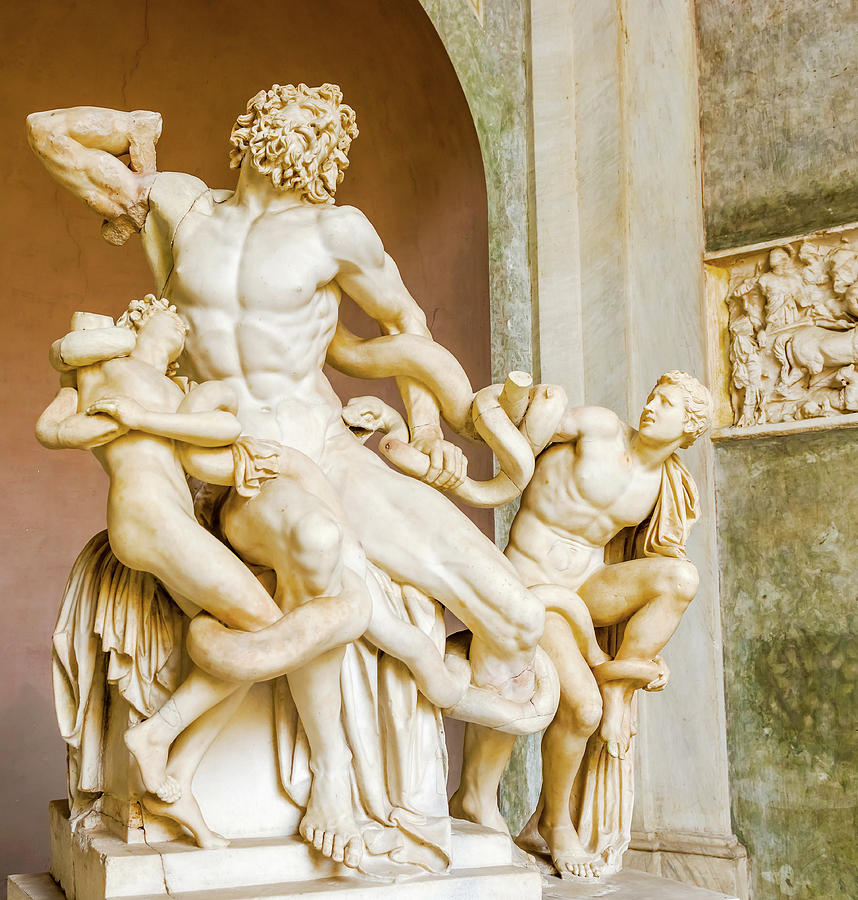
One of the most dramatic compositions of the ancient world. Bodies in motion, muscle tension and expressions of pain make this sculpture almost a cinematic scene frozen in stone.
In the Vatican Museums, among endless corridors and thousands of artifacts, stands one of the most dramatic sculptural scenes ever created. Laocoön and his sons seem frozen in a moment of battle. The atmosphere in the room is dense, almost tense, as if the energy of the sculpture is spilling into the air. It is a work that is not only seen with the eyes, but felt in the chest.
The Thinker, by Auguste Rodin, Paris
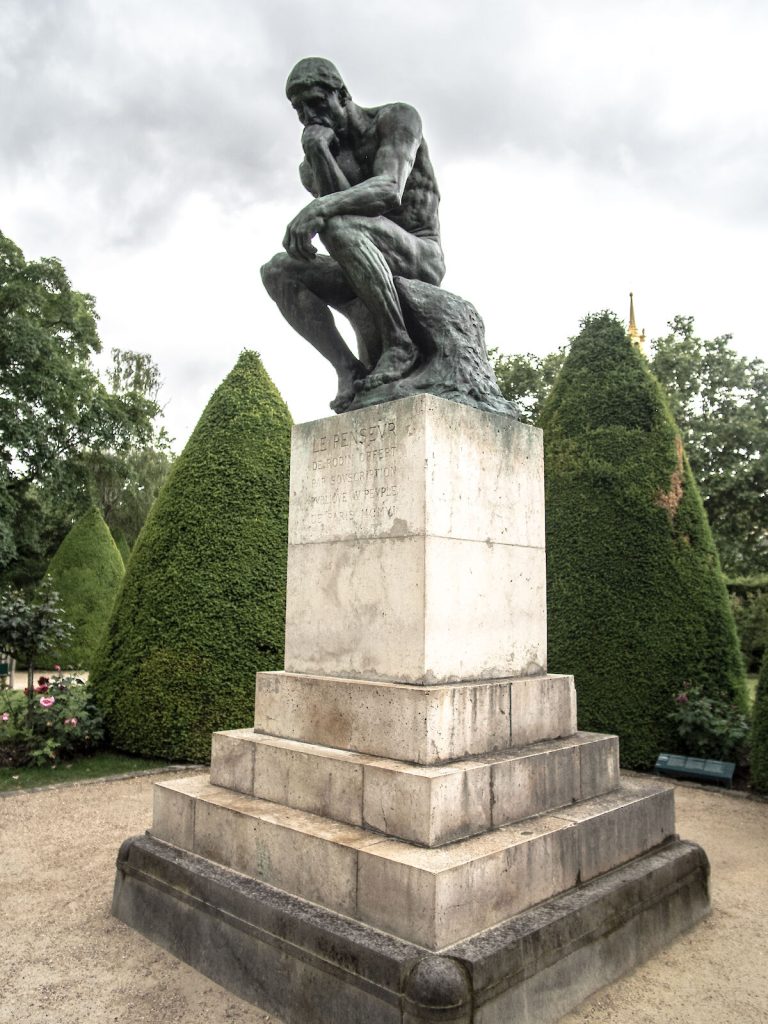
A symbol of human thought and intellect, one of the most recognizable works of the modern era.
In the garden of the Rodin Museum in Paris, among roses and silence, sits The Thinker. A strong body in a cramped pose, his head resting on his fist—a figure that seems to bear the weight of the entire world.
The place is peaceful, almost meditative. Standing before it, it is easy to feel thought and silence merging into one.
Winged Victory of Samothrace, Louvre, Paris
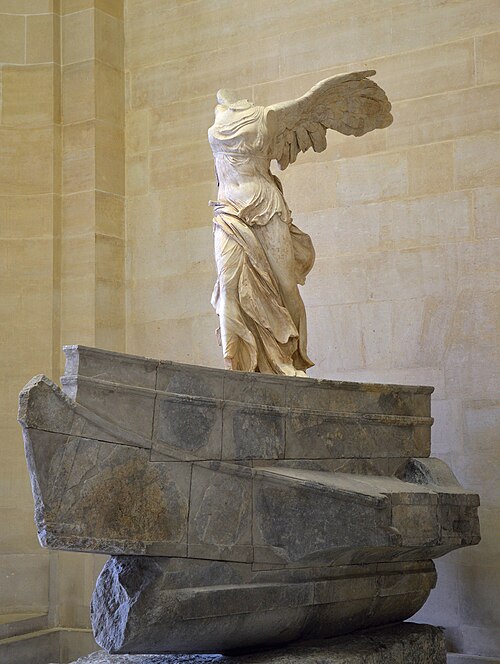
A sculpture that looks as if it will take off at any moment. Its dynamism, movement, and dramatic drapery make it one of the most impressive works of Hellenistic art.
At the top of the monumental staircase of the Louvre stands the Winged Victory, as if she had just landed from the sky. The drapery clinging to her body, the wings spread in motion — everything seems alive, although it was carved more than two thousand years ago.
The space around it is always filled with the whispers of visitors, yet the sculpture remains dominant, powerful, and almost supernatural.
Pietà, by Michelangelo, Vatican
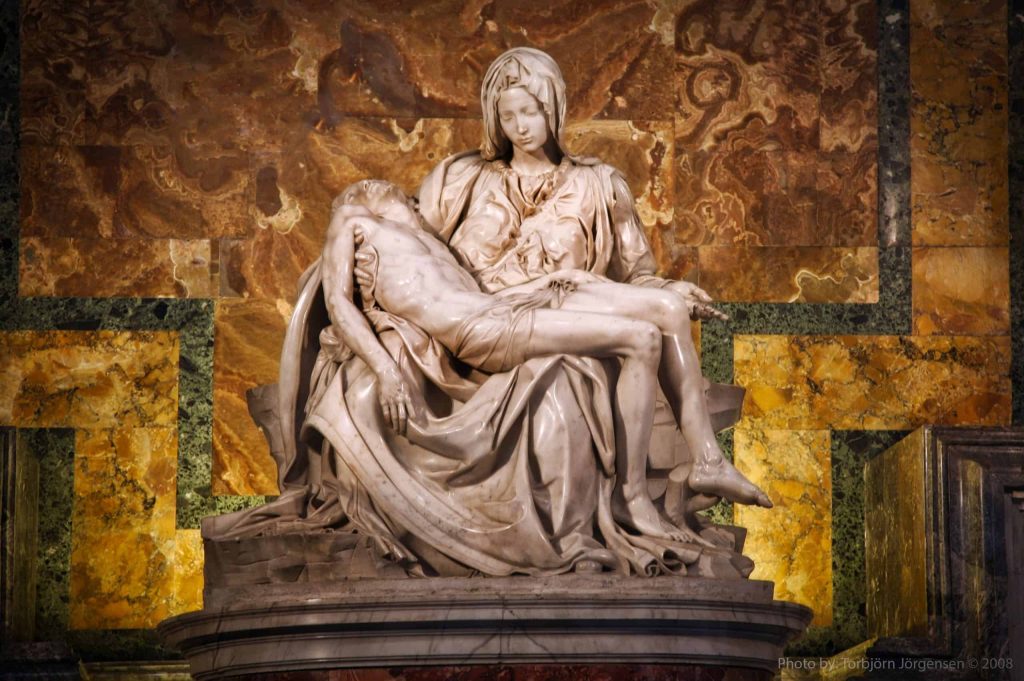
One of the most tender and emotional sculptures ever created, it captures in marble a moment of pain, maternal love, and divine silence.
In St. Peter’s Basilica, in semi-darkness and silence, stands the Pietà — one of the most tender works ever created. Mary holds the body of Christ with incredible softness, and the marble seems to turn into fabric and flesh.
The atmosphere is sacred, but also deeply human. It is a sculpture that does not ask for words, only silence.
Bust of Nefertiti — Berlin
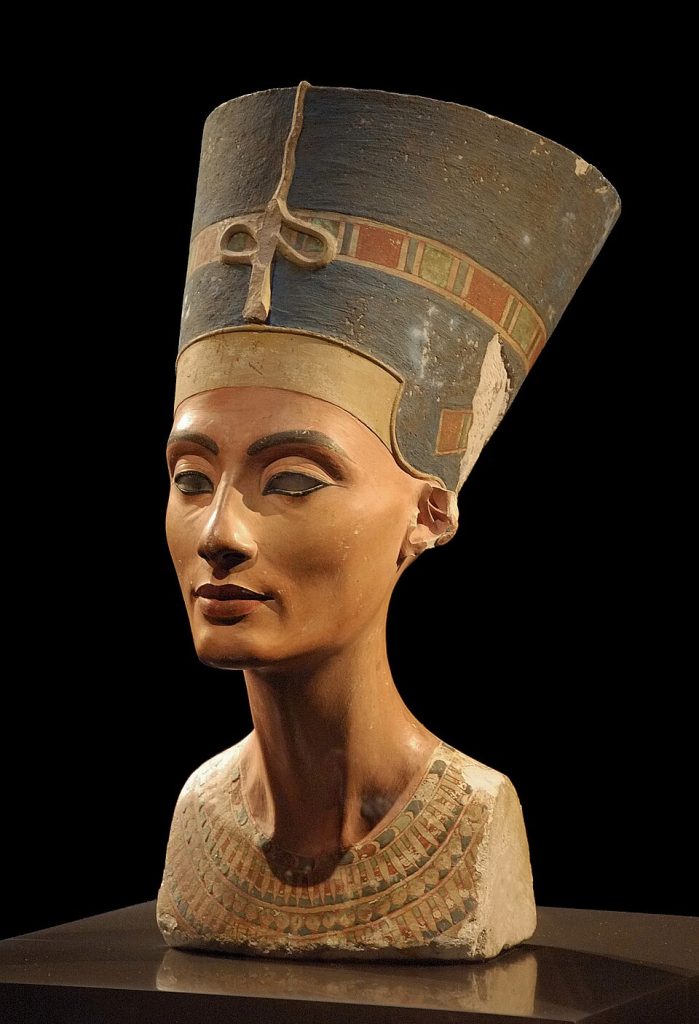
An icon of beauty that has survived for more than 3,300 years. Nefertiti fascinates with her elegance, refinement, and perfect proportions.
In the Neues Museum in Berlin, Nefertiti stands in a glass case that feels almost like a jewelry display. Her perfectly symmetrical face, elegant neck, and regal presence make her one of the most beautiful figures of the ancient world.
The space is minimalist, quiet, and almost sacred — as if beauty itself belongs in silence.
Perseus with the Head of Medusa, by Benvenuto Cellini, Florence
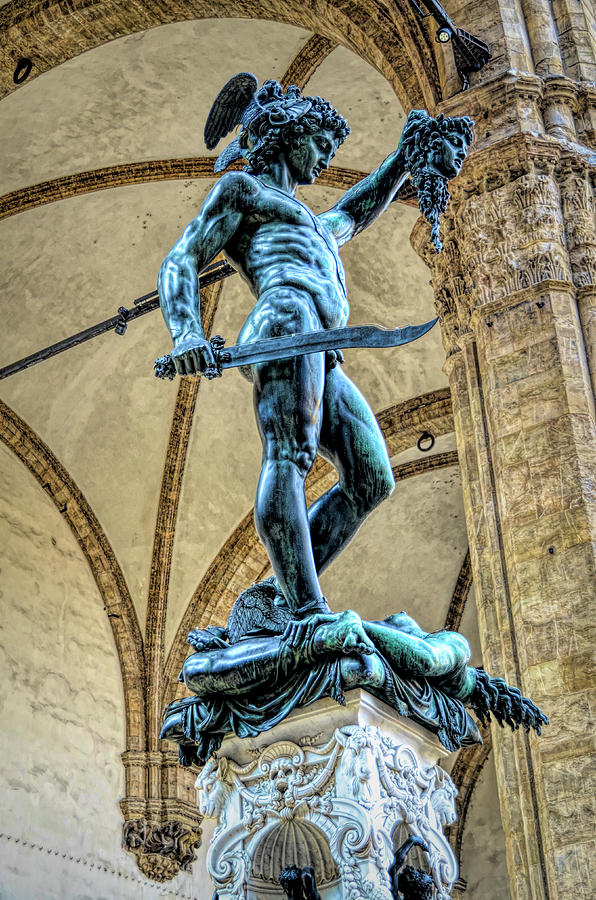
A bronze masterpiece that combines myth, drama, and virtuoso technique. Cellini created a sculpture that radiates power and theatricality.
In the Piazza della Signoria, under the open sky of Florence, stands Perseus — a bronze hero holding the head of Medusa. The sculpture is dramatic, almost theatrical, and the bronze catches the light in a way that highlights every detail. Surrounded by Renaissance palaces and the lively atmosphere of the square, Perseus seems like a scene from a myth unfolding in the middle of the city.
The Great Sphinx of Giza, Egypt
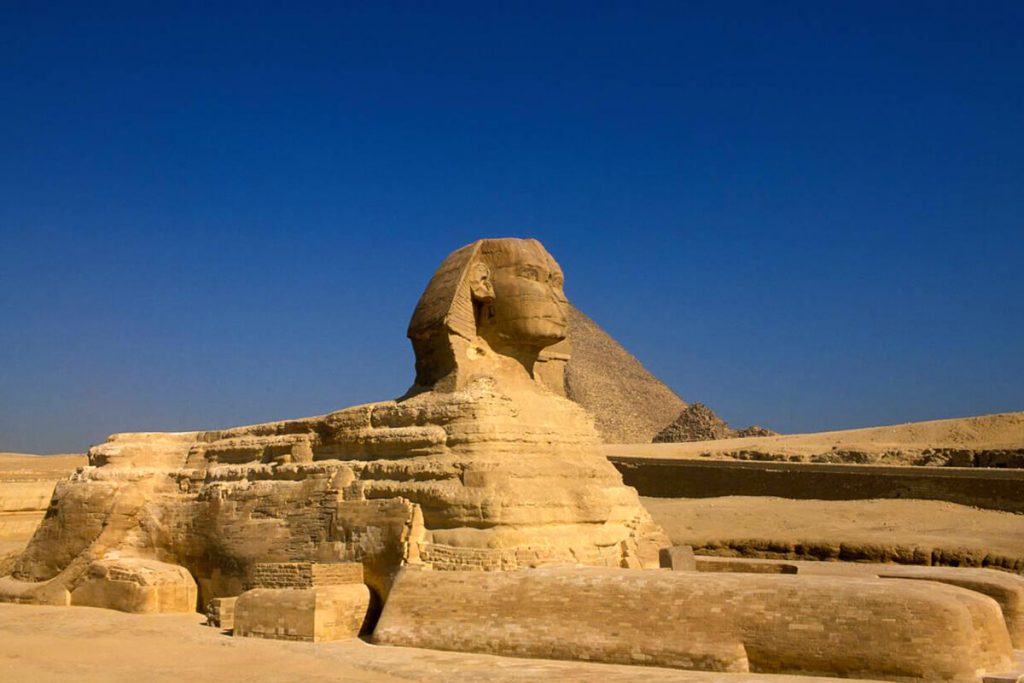
One of the oldest and most mysterious monuments of humanity, the Sphinx still holds the secrets of ancient Egypt, standing as a guardian of the pyramids.
On the edge of the desert, under an endless sky, stands the Sphinx — older than most civilizations we know today. Its gaze turns eastward, and its contours have been shaped by sand and wind over the centuries.
The place exudes silence and mysticism. Standing before it, one easily senses how small human history is compared to time.
Moai statues, Easter Island
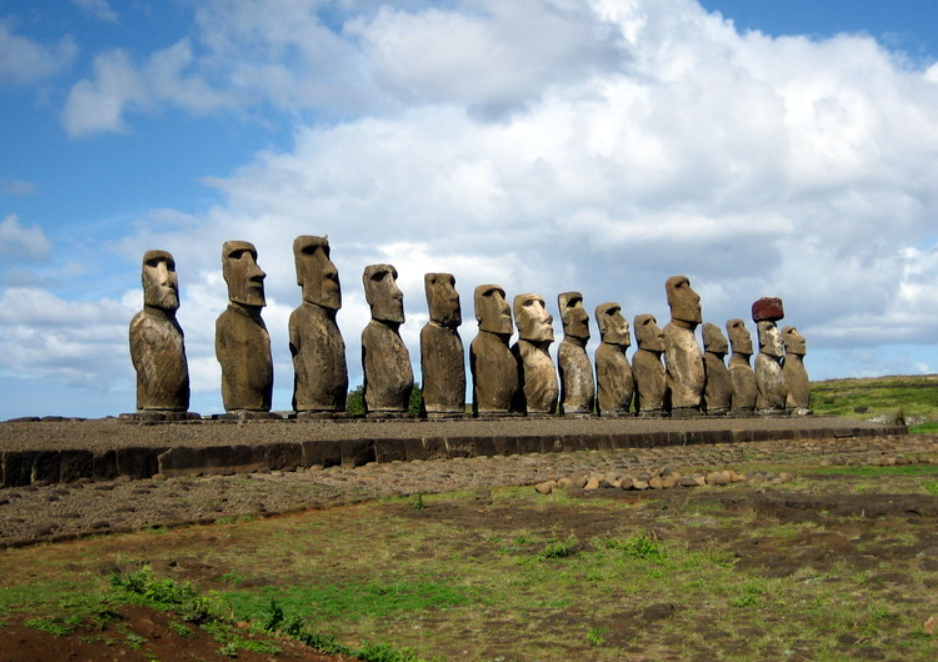
Monumental figures that have fascinated people for centuries. Their silent presence and unknown purpose make them one of the greatest mysteries of human civilization.
On Easter Island, amid green hills and the ocean crashing against the rocks, stand the Moai — silent guardians of the island. Their monumental presence and unknown purpose create a sense of awe and mystery.
The place feels like the end of the world, and the Moai seem to watch over it.
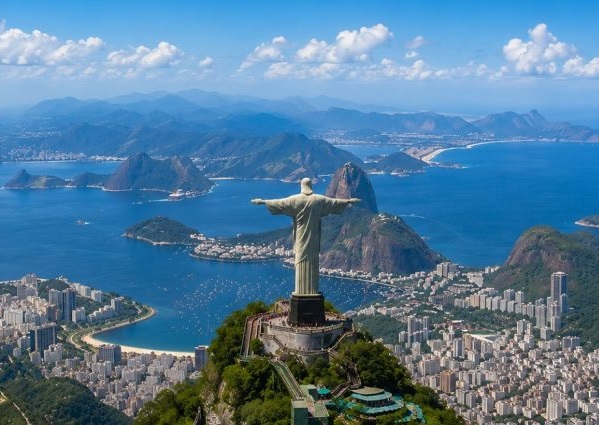
Christ the Redeemer, Rio de Janeiro
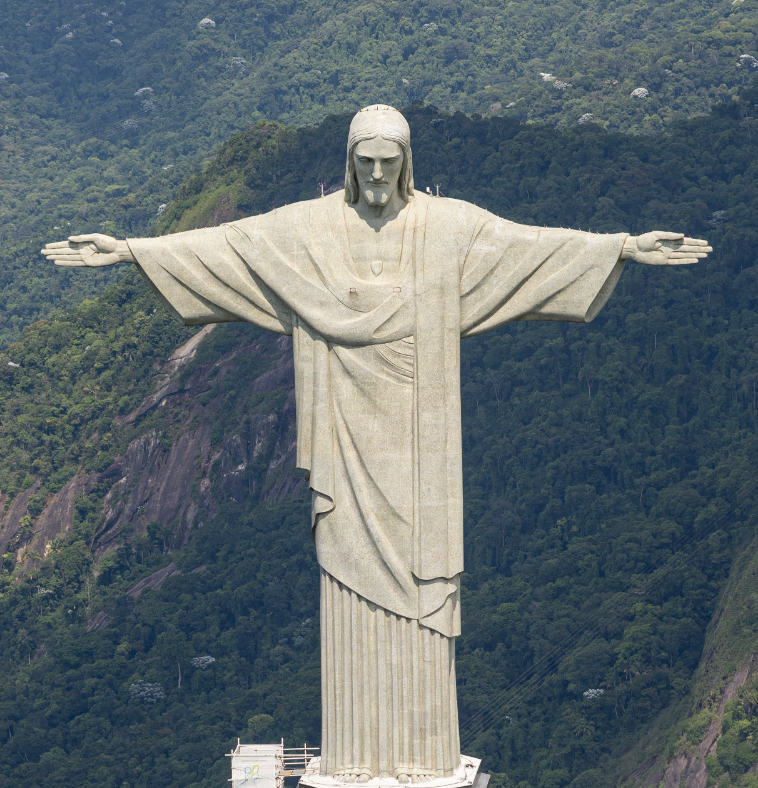
One of the most famous symbols of the modern world, Christ the Redeemer stands over Rio as a figure of peace and protection. Monumental yet gentle, the statue has become a global icon and an enduring symbol of Brazil.
High above Rio, atop Corcovado, stands Christ the Redeemer — a figure with outstretched arms over the city, the sea, and the mountains. The view from the top is spectacular, and the atmosphere is one of peace and grandeur.
The sculpture has become a symbol of hope, protection, and the beauty of one of the world’s most vibrant cities.
Each of these places carries its own energy: from the silence of a museum to the winds of the desert, from Renaissance squares to tropical peaks. The sculptures may be immobile, but a journey to them changes your perspective on the world — and on the beauty that human beings can create.